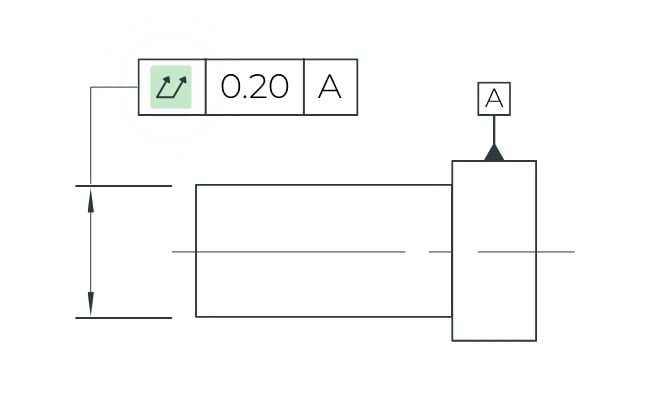
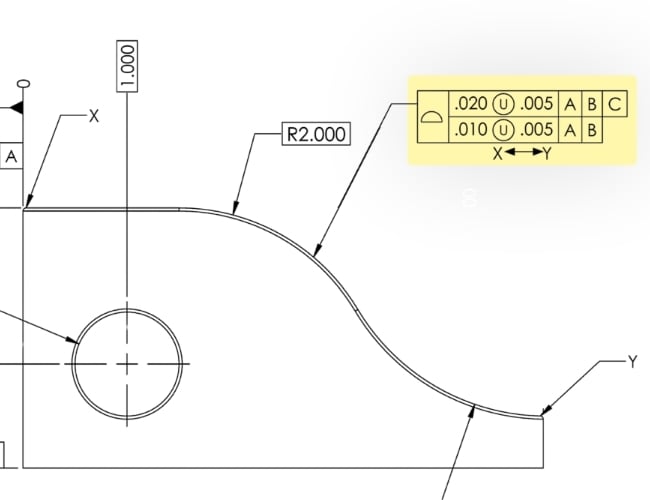
Feature Control Frames
Feature Control Frames (FCFs) are the standard way to communicate geometric tolerances, defining both the required values and the spatial relationships that control how a part functions in an assembly.
Communicating geometric intent that's free of ambiguity is foundational, especially for precision components with complex features.
Feature Control Frames (FCFs), as defined within the frameworks of ASME Y14.5 and ISO GPS standards, serve as the primary mechanism for conveying geometric tolerances in a structured, interpretable format. They encapsulate not only numerical tolerance requirements but also the spatial relationships that govern how a component must function within an assembly.
Feature Control Frames, therefore, are not simply drawing tools—they are integral to the digital thread, linking design intent to manufacturing execution and ultimately to inspection validation.
Anatomy of a Feature Control Frame
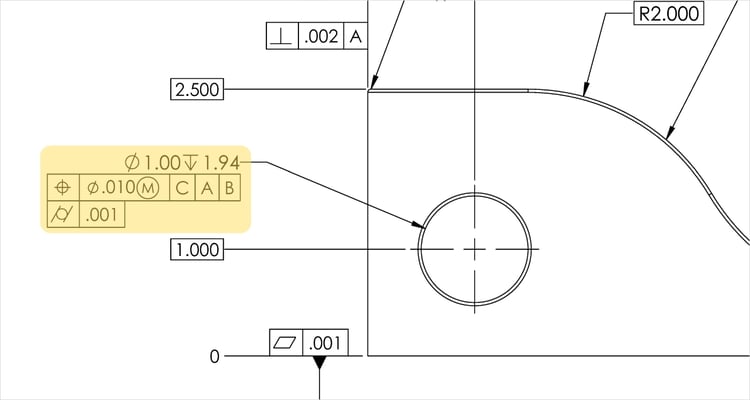
A Feature Control Frame (FCF) is a fundamental element of Geometric Dimensioning and Tolerancing (GD&T). It is the rectangular box that communicates the geometric tolerance requirements for a feature on an engineering drawing.
In practical terms, it defines how much variation is permitted in the form, orientation, location, or runout of a feature relative to a datum reference system.
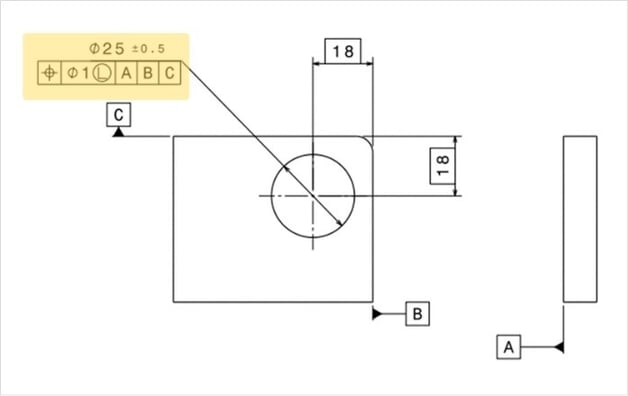
The leftmost segment defines the geometric characteristic—such as position, flatness, or runout—followed by a tolerance value that specifies the allowable variation. Subsequent segments may include material condition modifiers, datum references, or supplementary symbols that refine interpretation.
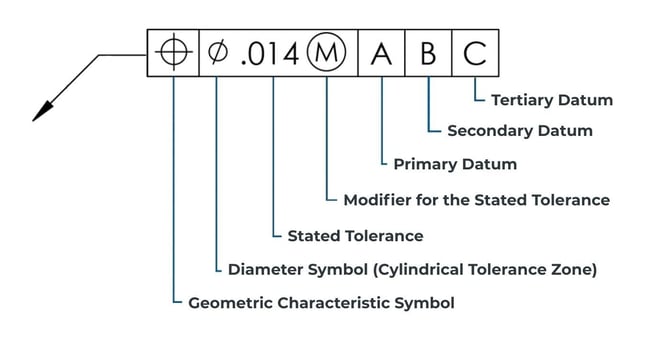
Understanding the reading order is critical.
The geometric characteristic sets the type of tolerance zone, while the tolerance value defines its size.
Material condition modifiers, such as Maximum Material Condition (MMC) or Regardless of Feature Size (RFS), alter how that tolerance is applied relative to part geometry.
Datum references establish the coordinate framework against which the tolerance is evaluated.
Multi-segment Feature Control Frames introduce additional nuance. Composite position tolerances, for example, separate pattern control from feature control, enabling designers to manage both global location and local feature relationships. These constructs are particularly valuable in high-density assemblies where pattern integrity is critical.
Classification of Geometric Controls
The geometric characteristics defined within Feature Control Frames are typically categorized into five control groups, each governing a different aspect of geometry.
Form Controls
Form controls regulate the inherent shape of a feature without reference to any external datum. Straightness, flatness, circularity, and cylindricity are used to ensure that surfaces and features maintain their intended geometry independent of orientation or location.
In precision applications, form tolerances are often applied to sealing surfaces, optical interfaces, or bearing journals, where deviations can lead to leakage, misalignment, or premature wear.
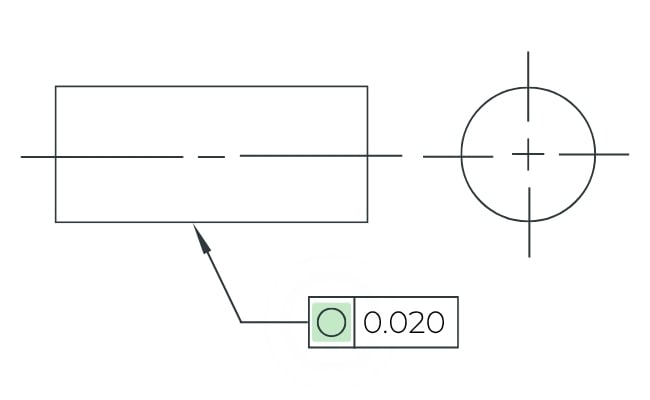
Circularity
A 2D tolerance zone defined by two concentric circles at any given cross‑section
Controls roundness only; does not control axis location or orientation
Applies to circular features such as cylinders, cones, or spheres
Does not require a datum reference; evaluated independently at each cross‑section
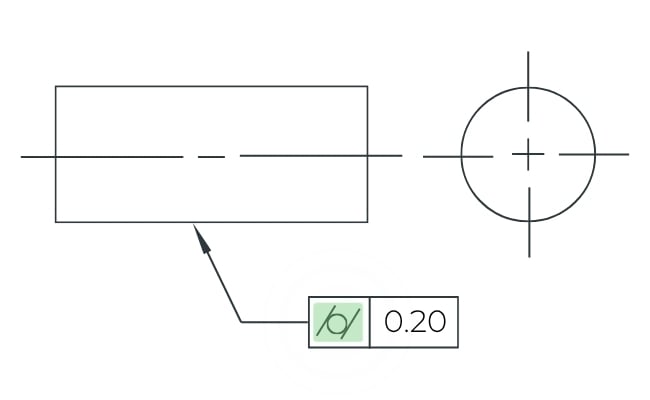
Cylindricity
A 3D tolerance zone bounded by two coaxial cylinders (more restrictive than circularity alone)
Simultaneously controls circularity, straightness, and taper of a cylindrical surface
Applies to cylindrical features only
Does not require a datum reference
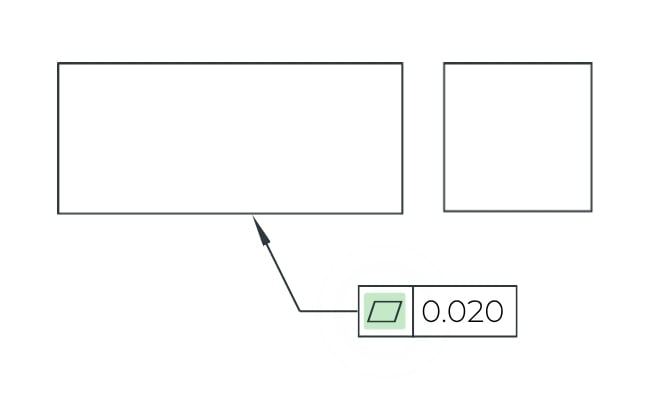
Flatness
A 3D tolerance zone defined by two parallel planes
Controls surface flatness only; does not control orientation or location
Applies to planar surfaces
Does not require a datum reference
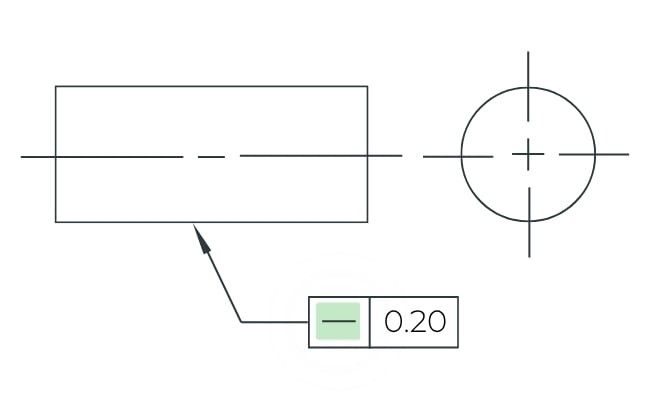
Straightness
A 2D or 3D tolerance zone defined by two parallel lines (for surface elements) or a cylindrical zone (for an axis)
Controls element straightness only; does not control orientation or location
Applies to individual line elements of a surface or to the derived median line (axis) of a feature of size
Does not require a datum reference
Orientation Controls
Orientation controls define how a feature is angled relative to a datum. Parallelism, perpendicularity, and angularity are essential for ensuring alignment between components.
In aerospace assemblies, for instance, misalignment introduced by poor perpendicularity control can result in uneven load distribution and accelerated fatigue. Orientation becomes even more critical when components undergo thermal expansion, as differential movement can amplify small angular deviations.
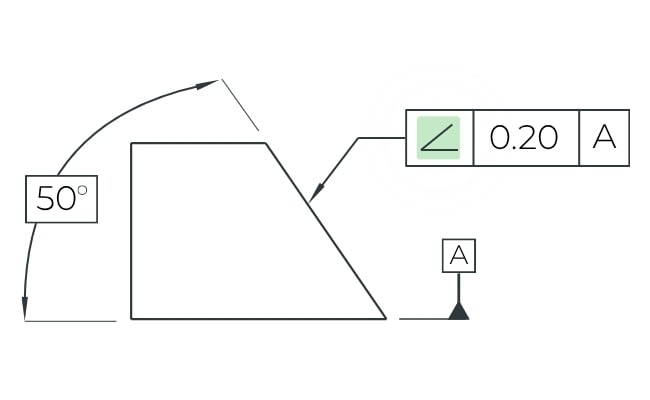
Angularity
A 3D tolerance zone defined by two parallel planes or a cylindrical zone oriented at a specified angle relative to a datum reference frame
Controls the angular orientation of a feature relative to a datum
May be applied to planar surfaces or features of size and used with MMC or LMC
Requires a datum reference
Parallelism
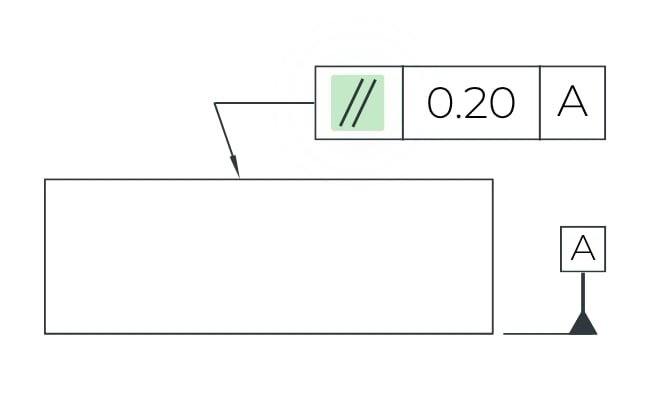
A tolerance zone defined by two parallel planes or a cylindrical zone oriented parallel to a datum
Controls feature orientation relative to a datum
May be applied to surfaces or features of size and used with MMC or LMC
Requires a datum reference
Perpendicularity
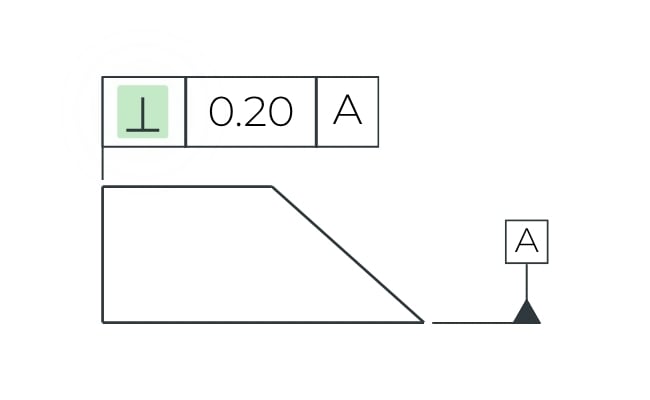
A tolerance zone defined by two parallel planes or a cylindrical zone oriented at 90° to a datum
Controls perpendicular orientation relative to a datum
May be applied to surfaces or features of size and used with MMC or LMC
Requires a datum reference
Location Controls
Location controls, particularly position, govern where features are situated relative to a datum reference frame. True position is among the most widely used and misunderstood controls, defining a tolerance zone—often cylindrical—within which a feature’s axis or center must reside.
In high-precision assemblies, true position directly affects interchangeability and fit. While concentricity and symmetry exist within this category, their practical application is increasingly limited due to inspection complexity and ambiguity.
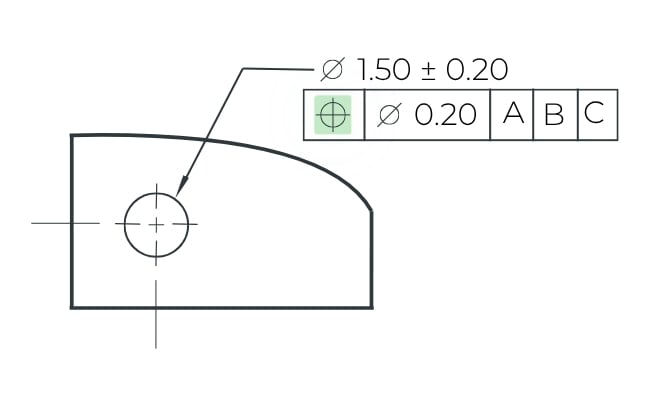
Position
A 3D tolerance zone that surrounds the true position, specified by referencing datum features within the FCF
Used for related features only
May be applied to any feature of size (e.g., hole, slot, boss, tab, or sphere)
Can be used with MMC, LMC, projected tolerances, and tangent planes
Concentricity
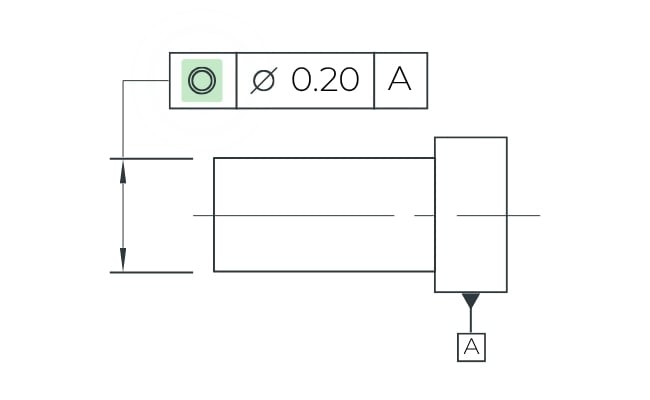
A cylindrical tolerance zone that controls a feature’s median points relative to a datum axis
Ensures uniform wall thickness or mass distribution
Applies to features of size only
Requires a datum axis
No longer recommended in many applications due to inspection complexity
Symmetry
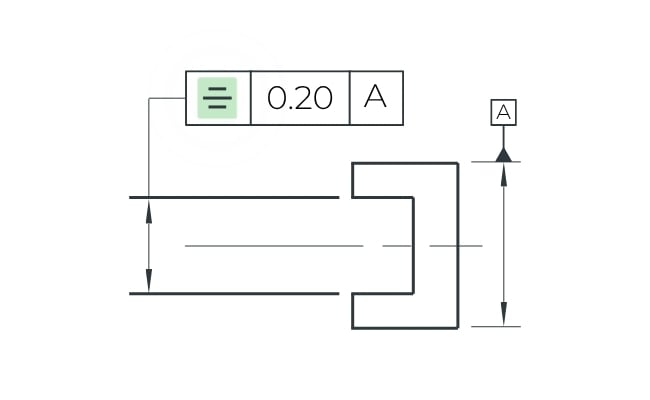
A tolerance zone defined by two parallel planes centered about a datum plane or axis
Controls symmetry of a feature relative to a datum
Applies to features of size only
Requires a datum reference
Rarely used due to inspection difficulty
Profile Controls
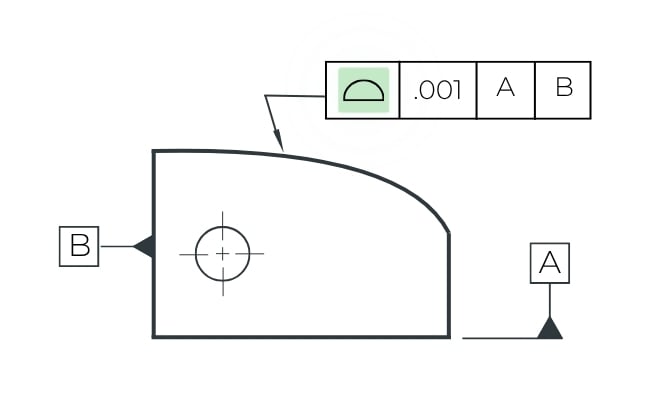
Profile tolerances provide a versatile means of controlling complex geometries. Profile of a line addresses 2D cross-sections, while profile of a surface governs entire 3D surfaces.
These controls are indispensable in applications such as turbine blades, orthopedic implants, and semiconductor tooling, where freeform geometries must adhere to tight functional requirements. Profile tolerances can simultaneously control form, orientation, and location, making them particularly powerful—but also susceptible to overuse.
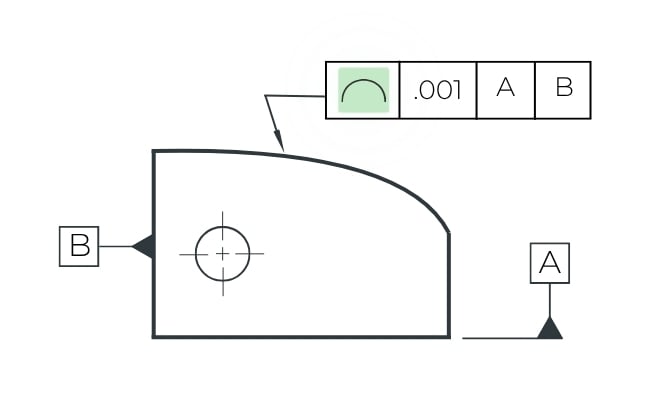
Line Profile
A 2D tolerance zone defined by two equidistant curves about the true profile
Controls form, orientation, and location of a line element
May be applied to any line element of a feature; often used for complex or contoured features
May require datum references depending on function
Surface Profile
A 3D tolerance zone defined by two equidistant surfaces about the true profile
Controls form, orientation, and location simultaneously
Applies to complex or free‑form surfaces; can replace multiple individual tolerances
May require datum references
Runout Controls
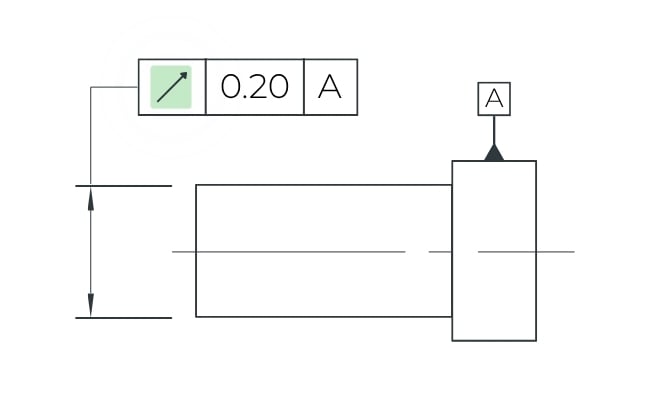
Runout controls are specific to rotating components. Circular runout assesses variation in a single cross-section during rotation, while total runout evaluates the entire surface.
These controls are critical for shafts, spindles, and rotating assemblies where dynamic balance and vibration must be managed. In semiconductor equipment, even minimal runout can induce process instability, reinforcing the need for precise rotational control.
Circular Runout
A 2D tolerance zone evaluated at individual circular elements during rotation about a datum axis
Controls circular form and coaxiality simultaneously at each cross‑section
Applies to surfaces of revolution only; evaluated using a rotating inspection method
Requires a datum axis
Total Runout
A 3D tolerance zone evaluated across the full length of a surface during rotation
Controls form, orientation, and coaxiality simultaneously
Applies to surfaces of revolution only; more restrictive than circular runout
Requires a datum axis