
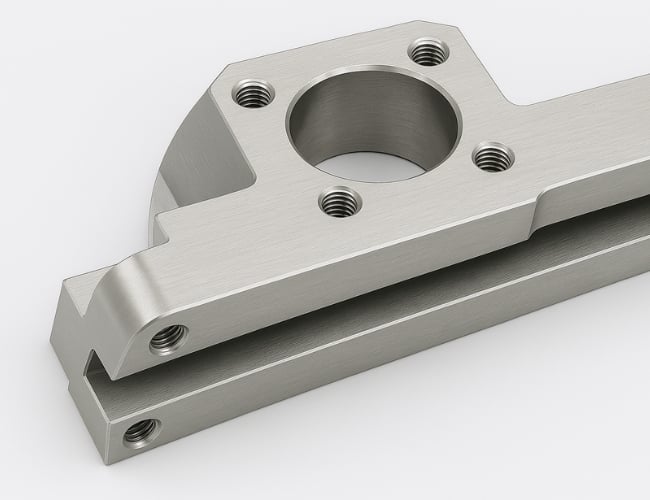
CNC Machining Monel
This article reviews the Monel alloys most frequently used for machined components and outlines key factors at every stage of production, including design, machinability, surface finish, and sourcing.
Engineers turn to Monel when they need a material that delivers both exceptional corrosion resistance and high strength, especially in conditions where stainless steel starts to break down.
As a nickel‑copper alloy family, Monel performs reliably in seawater, hydrofluoric acid, many alkalis, and a wide range of chemical processing environments. Unlike many corrosion‑resistant alloys, it keeps its mechanical properties across a broad temperature range and does not depend on passive oxide films the way stainless steels do.
From a machining standpoint, Monel occupies an important middle ground between stainless steel and nickel‑based superalloys like Inconel. It is tough, ductile, and prone to work hardening, but it does not retain strength at elevated temperatures to the same extreme degree as Inconel. This makes Monel challenging but manageable—if geometry and machining strategy are aligned. Engineers who underestimate Monel often design parts as if it were a stainless steel upgrade, only to discover that tool wear, burr formation, and tolerance instability behave very differently at the spindle.
Common reasons engineers select Monel include:
- Exceptional resistance to seawater and marine atmospheres
- Strong performance in chemical and hydrocarbon processing
- High toughness and ductility (resists brittle failure)
- Stable mechanical properties across moderate temperature ranges
- Compatibility with welding and forming operations
- Long service life in corrosive, high‑velocity fluid environments
CNC‑machined Monel components are most often found in corrosion‑dominated systems, where the cost of material and machining is justified by long service life and failure resistance. Parts are frequently load‑bearing or flow‑critical, meaning dimensional stability and surface integrity are as important as corrosion performance.
Typical CNC-machined Monel applications include: corrosion-resistant shafts, fasteners and pump components, chemical processing equipment, oil and gas components, heat exchanger hardware, and aerospace components.
Commonly Machined Grades of Monel
Although often grouped together, Monel alloys vary meaningfully in machinability, strength, and response to cutting forces. Monel 400 represents the baseline material; R‑405 modifies that chemistry to improve machinability; and K‑500 adds precipitation hardening to significantly increase strength. Treating these alloys as interchangeable is a common engineering mistake that leads to mismatched tolerances, unexpected tool wear, and avoidable cost.
Monel alloys share several machining traits—high ductility, tendency to form long chips, and susceptibility to work hardening—but the degree to which those traits dominate varies by grade and heat‑treat condition. Engineers must select both the correct alloy and appropriate geometry to achieve stable, repeatable machining outcomes.
|
Alloy |
Ultimate Strength |
Yield Strength |
Fatigue Strength |
Shear Strength |
Shear Modulus |
Hardness |
Elongation |
| Monel 400 | 550 MPa | 240 MPa | 240 MPa | 380 MPa | 64 GPa | 65 HRB | 35% |
| Monel 405 | 520 MPa | 220 MPa | 230 MPa | 360 MPa | 64 GPa | 65 HRB | 30% |
| Monel K-500 | 1100 MPa | 880 MPa | 560 MPa | 700 MPa | 61 GPa | 110 HRB | 25% |
| Monel R-405 | 520 MPa | 220 MPa | 230 MPa | 360 MPa | 64 GPa | 65 HRB | 30% |
- Monel 400
- Monel 405
- Monel K-500
- Monel R-405
-
Monel 400
Monel 400
Monel 400 is the most widely used Monel alloy, composed primarily of nickel and copper with small amounts of iron and manganese. It offers excellent corrosion resistance across a wide range of environments and maintains good strength and toughness at both cryogenic and moderately elevated temperatures. From a machining perspective, Monel 400 is tough and ductile, with a strong tendency toward work hardening if cutting conditions are not well controlled.
-
Monel 405
Monel 405
Monel R‑405 is the free‑machining version of Monel 400, achieved by adding a small amount of sulfur to improve chip breaking. Mechanically and chemically, it is very similar to Monel 400, but the sulfur inclusions significantly reduce cutting forces and improve machinability, particularly in turning and screw‑machine operations. R‑405 is often selected when corrosion resistance is required but machining efficiency is a priority.
-
Monel K-500
Monel K-500
Monel K‑500 builds on the corrosion resistance of Monel 400 by adding aluminum and titanium, enabling precipitation hardening and significantly increasing strength and hardness. This makes K‑500 attractive for high‑load, corrosion‑resistant applications such as shafts, fasteners, and structural components in marine and oil & gas environments. From a machining standpoint, K‑500 is markedly more difficult than 400 or R‑405, particularly in the aged condition.
-
Monel R-405
Monel R-405
Monel R-405 is a free-machining version of Monel 400, offering similar strength and corrosion resistance but with added sulfur to improve machinability. It is ideal for high-volume, automatic screw machining in marine, chemical processing, and oil & gas environments, where the performance of Monel 400 is needed along with higher machining efficiency.
Production Considerations
Across the Monel family, design intent, machinability, and surface integrity are tightly coupled. Unlike precipitation‑hardened superalloys, Monel alloys reward conservative design stresses, disciplined machining practices, and explicit surface condition control—particularly in corrosive service.
Design
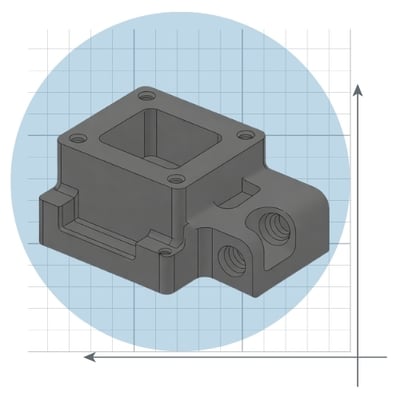
Designing Monel parts for CNC machining is about preventing work hardening and maintaining stability. Geometry that forces rubbing, small tools, or long engagement times will amplify machining difficulty and cost. Engineers should approach Monel as a material that rewards decisive cutting and punishes hesitation.
The most effective Monel designs emphasize stiffness, accessibility, and process sequencing. Decisions about wall thickness, radii, and feature openness often matter more than the nominal tolerance callout.
DFM best practices Monel components:
Monel behaves like other exotic, work‑hardening alloys, so low chip loads are punished by heat and hardening. Design features so finishing uses consistent stock and keeps the tool in continuous, stable engagement
Avoid deep, narrow pockets and blind features that require long‑reach tools, since long overhangs lead to deflection and surface integrity problems
Size internal corner radii so larger cutters can be used and engagement is limited—corner overload is a common cause of tool edge failure in tough alloys
When fatigue or corrosion performance matters, specify surface finish only on functional areas. Avoid blanket tight Ra callouts that drive unnecessary finishing on a difficult alloy.
For regulated parts, plan for possible rework: provide gage access, avoid hidden critical features at the bottom of blind pockets, and define datums that remain usable after re‑clamping
- Monel 400
- Monel 405
- Monel K-500
- Monel R-405
-
Monel 400
Monel 400
Monel 400 is a nickel‑copper alloy known for outstanding resistance to seawater, HF acid, and alkaline environments, with stable, tough properties down to cryogenic temperatures. It is commonly used for shafts, valves, pumps, and fasteners where corrosion resistance and toughness matter more than high yield strength, and its long history under ASTM/AMS specs makes it a low‑risk choice in regulated systems.
-
Monel 405
Monel 405
Monel 405 is a free‑machining version of Monel 400 that trades some ductility and toughness for better chip control. It’s typically used for high‑volume fittings, threaded parts, and small hardware in non‑pressure, non‑fatigue‑critical roles where machinability and throughput matter more than maximum strength.
-
Monel K-500
Monel K-500
Monel K‑500 is a precipitation‑hardened nickel‑copper alloy that keeps Monel 400’s corrosion resistance while adding much higher strength, hardness, and wear resistance. It’s used for shafts, valve trim, fasteners, and rotating parts with higher load or wear demands, and its performance depends on heat‑treat condition, which must be tightly controlled and certified in regulated applications.
-
Monel R-405
Monel R-405
Monel R‑405 is a trade designation closely aligned with Monel 405, supplied primarily as bar stock for automatic and high‑speed CNC machining. Its composition is optimized for machinability rather than structural performance, and it is generally limited to small, non‑critical components. Designers should treat R‑405 as a manufacturing convenience grade and ensure its use is explicitly approved when operating under strict material governance frameworks.
Machinability
Monel’s machinability is governed by high toughness, ductility, and a pronounced tendency to work harden. Unlike brittle materials that fracture cleanly at the cutting edge, Monel tends to deform plastically, which increases cutting forces and encourages long, continuous chip formation. If the tool rubs or dwells, the surface work‑hardens locally, and subsequent passes encounter a harder, more abrasive layer. This feedback loop is responsible for many of the tool wear and finish problems associated with Monel machining.
Another key characteristic is Monel’s heat behavior during machining. It does not carry heat away from the cut as effectively as materials like aluminum, yet it also does not soften much at typical machining temperatures. As a result, heat builds up at the cutting edge and accelerates tool wear. To machine Monel successfully, it is critical to maintain a stable chip load, use sharp tools, and design part geometry that supports continuous cutting instead of frequent tool engagement and disengagement.
Engineers should recognize that machinability outcomes in Monel are often geometry‑driven rather than machine‑driven. Parts that support rigid tooling and chip evacuation machine predictably; parts that do not tend to exhibit rapid tool wear and tolerance drift regardless of shop capability.
Key machining characteristics engineers should account for:
- Strong work hardening from rubbing
- Long chip formation
- High cutting forces
- Sensitivity to tool sharpness and rigidity
- Monel 400
- Monel 405
- Monel K-500
- Monel R-405
-
Monel 400
Monel 400
Monel 400 machines like a strongly work‑hardening austenitic stainless, but with lower thermal conductivity and higher cutting forces. It demands rigid setups, sharp positive‑rake carbide tools, and consistent chip load to avoid work hardening and rapid tool wear, but with good process control it is the most forgiving Monel grade for CNC production.
-
Monel 405
Monel 405
Machinability is Monel 405’s main benefit. Sulfur improves chip breakage, lowers cutting forces, and makes tool life more predictable than Monel 400—especially in high‑volume turning and screw‑machine work. It still work hardens, so consistent process control is required, and it’s best used in simple, repetitive operations rather than complex multi‑axis machining.
-
Monel K-500
Monel K-500
Monel K‑500 is much harder to machine than Monel 400, especially in the aged condition. It generates high cutting forces, work hardens quickly, and can wear tools out fast. Most shops machine it in the solution‑annealed state first, then heat treat to final properties. Stable production depends on very rigid fixturing, conservative speeds, aggressive feeds, and high‑quality tooling and setups, because K‑500 has a much tighter, less forgiving process window than Monel 400.
-
Monel R-405
Monel R-405
Monel R‑405 is chosen for its machinability. It offers better chip control, lower cutting forces, and more predictable tool life than Monel 400 in high‑volume turning, as long as feeds are kept high enough to avoid work hardening. It is rarely used for complex multi‑axis work or applications that demand high toughness.
Surface Finish
Finishing options: electroplating, bead blasting, electroless nickel plating, powder coating, anodizing, hand polishing, and passivation.
Monel’s work‑hardening behavior and high nickel content make surface finish control more than an aesthetic concern—it is a functional requirement. During CNC machining, aggressive cutting parameters or insufficient tool sharpness can rapidly increase near‑surface hardness, leading to torn material, smeared surfaces, and inconsistent roughness values. These effects are most pronounced on finishing passes, where inadequate chip formation or tool dwell can degrade surface integrity. As a result, finish quality in Monel is strongly coupled to tool selection, cutting strategy, and the discipline of minimizing heat input at the tool–workpiece interface.
Surface roughness directly influences Monel’s in‑service performance, particularly in corrosion‑resistant and high‑stress applications. Rough or mechanically damaged surfaces can act as initiation sites for pitting corrosion, fatigue cracking, or galling in sliding interfaces. While Monel is inherently resistant to many corrosive environments, that resistance assumes a relatively uniform and undisturbed surface layer. Specifying overly aggressive surface finishes without regard to machining reality can increase cost and scrap rates, while under‑specifying finish requirements may compromise long‑term reliability in pressure, marine, or chemical service.
Important surface finish considerations:
- Tool sharpness and geometry are critical to avoid surface tearing from work hardening
- Cutting heat directly affects surface integrity and near‑surface hardness
- Ra requirements should be function‑driven, not cosmetic by default
- Rough finishes can reduce corrosion and fatigue performance despite Monel’s alloy strength
- Post‑processing can unintentionally degrade functional surfaces if not tightly controlled
Post‑machining surface treatments should be evaluated carefully, as Monel does not respond to finishing processes in the same manner as aluminum or carbon steel. Mechanical polishing can improve Ra values but may further work‑harden the surface if poorly controlled. Bead blasting can provide cosmetic uniformity but often increases effective surface area and should be avoided on sealing or fatigue‑critical features. For high‑performance components, it is generally preferable to achieve the required surface finish directly through controlled CNC finishing passes rather than relying on corrective post‑processing, thereby preserving dimensional accuracy and surface integrity.
- Monel 400
- Monel 405
- Monel K-500
- Monel R-405
-
Monel 400
Monel 400
For Monel 400, surface finish is mainly about corrosion resistance and sealing, not just Ra. As‑machined finishes often work, but wetted and sealing surfaces may need controlled finishing or polishing, and expectations for surface integrity should be called out explicitly on critical parts.
-
Monel 405
Monel 405
Monel 405 usually yields smoother as‑machined finishes than Monel 400, but its sulfur inclusions can trigger corrosion in harsh environments. It is rarely used on wetted or dynamically loaded surfaces, and engineers should avoid aggressive finishing that might expose inclusions or reduce corrosion resistance.
-
Monel K-500
Monel K-500
For Monel K‑500, surface finish is a functional requirement, not a cosmetic one. Because these parts often see dynamic loads and wear, machining damage can hurt fatigue life and galling resistance, so critical areas like shafts, seals, and threads usually need controlled secondary finishing.
-
Monel R-405
Monel R-405
Like Monel 405, R‑405 usually has acceptable as‑machined finish, but its sulfur inclusions make it a poor choice for aggressive corrosion or fatigue‑critical features. Avoid using R‑405 where surface integrity drives long‑term performance.
Sourcing
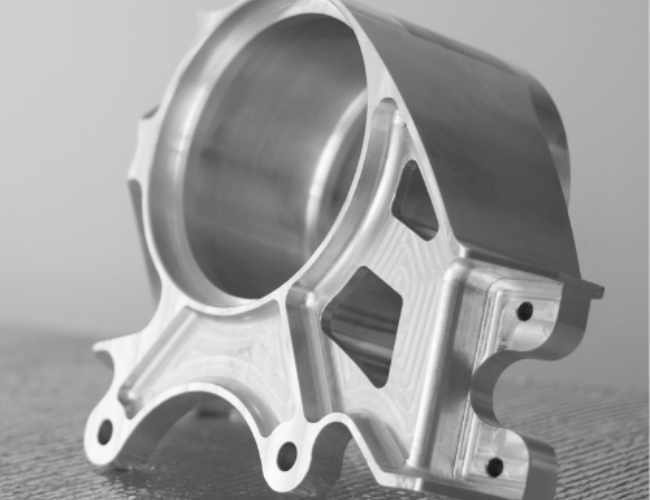
Monel part cost is driven more by long machining time, heavy tool wear, and intensive inspection than by raw material, though free‑machining grades like R‑405 can lower cost when the geometry allows.
Lead time depends on material availability, secondary processes, and part complexity; alloys like K‑500 add heat‑treat steps that extend schedules, so designing parts that machine right the first time with minimal fixturing and rework is key to controlling cost and lead time.
Primary cost drivers include:
- Tool wear
- Conservative machining strategies
- Heat treatment cycles
- Complex inspection
- Over‑tight tolerances