
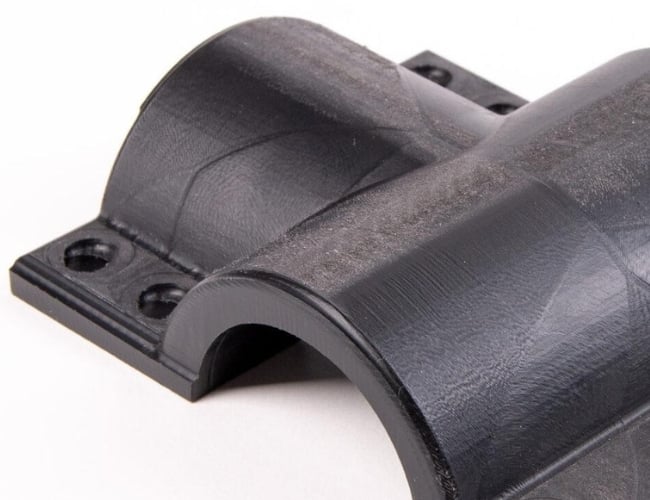
What is PVC?
PVC is a widely used thermoplastic for machined chemical-processing, electrical, fluid-handling, fixture, and structural components. It offers strong chemical and corrosion resistance, dimensional stability, durability, and cost-effective performance.
PVC machines well using conventional CNC equipment and is often selected when applications require resistance to acids, bases, moisture, and corrosive environments.
Updated: 9/8/26
What are the key properties of PVC?
PVC is valued in CNC machining applications for its corrosion resistance, dimensional stability, and ease of fabrication. Key characteristics include:
- Excellent chemical resistance
- Good machinability
- Good dimensional stability
- High corrosion resistance
- Good electrical insulation
- Low moisture absorption
- Lightweight
- Good weather resistance
- Self-extinguishing characteristics
- Cost-effective material
Because PVC is an amorphous thermoplastic, it exhibits relatively consistent mechanical behavior and maintains dimensional stability across a wide range of operating conditions.
Chemical Properties and Composition of PVC
PVC is a thermoplastic polymer produced through the polymerization of vinyl chloride monomer (VCM). Its chlorine content contributes significantly to its chemical resistance, flame resistance, and electrical insulating properties. PVC formulations frequently include additives such as:
- Plasticizers for flexibility
- Stabilizers for heat resistance
- Lubricants for processing
- Impact modifiers for toughness
- UV stabilizers for outdoor applications
- Fillers and pigments for performance and appearance
Chemical Composition of PVC
| Component | Chemical Structure |
|
Vinyl Chloride Monomer (VCM)
|
CH₂=CHCl
|
| PVC Repeating Unit |
(C₂H₃Cl)n
|
What are the advantages of PVC?
Excellent Chemical Resistance
PVC resists a broad range of acids, bases, salts, and corrosive chemicals, making it ideal for chemical processing and fluid-handling applications.
Corrosion Resistance
Unlike metals, PVC will not rust, oxidize, or corrode when exposed to moisture or many aggressive environments.
Good Machinability
Rigid PVC machines cleanly using sharp carbide tooling and can maintain tight tolerances when proper machining practices are followed.
Good Electrical Insulation
PVC provides excellent electrical insulating properties and is widely used for cable jackets, electrical enclosures, and insulation components.
Cost-Effective Material
PVC offers a favorable balance between performance and material cost, making it a popular choice for industrial and commercial applications.
Easy Fabrication
PVC can be bonded, welded, machined, thermoformed, and fabricated using conventional plastic-processing techniques.
What are the disadvantages of PVC?
Limited Temperature Resistance
PVC is not recommended for prolonged exposure to elevated temperatures. Excessive heat can result in softening, deformation, or degradation.
Lower Impact Strength Than Some Engineering Plastics
Compared to materials such as polycarbonate, nylon, or UHMW, rigid PVC may be more brittle under impact loading.
Potential Brittleness at Low Temperatures
PVC can become less impact resistant and more prone to cracking in cold environments.
Tool Heat Sensitivity
Excessive cutting temperatures can cause localized melting, surface degradation, or discoloration during machining.
Environmental Considerations
Certain PVC formulations require specialized recycling processes, and material selection should consider environmental and regulatory requirements.
What are the types of PVC?
Several grades are available to meet specific performance and machining requirements.
- Rigid PVC (PVC-U): General-purpose industrial grade with high stiffness and chemical resistance
- Chlorinated PVC (CPVC): Improved temperature and chemical resistance for demanding applications
- Flexible PVC: Plasticized PVC used for tubing, seals, and flexible components
- High-Impact PVC: Modified formulations that improve toughness and impact resistance
- Electrical-Grade PVC: Designed for insulation and electrical applications
- UV-Stabilized PVC: Formulated for prolonged outdoor exposure and weather resistance
What to know about CNC machining PVC?
Tooling
Use sharp, polished tooling designed for plastics:
- Use single- or two-flute, high-helix carbide end mills for efficient chip evacuation.
- Use polished O-flute cutters for improved finish quality.
- Use sharp drills with adequate clearance to reduce heat generation.
- Minimize rubbing and recutting of chips.
- Maintain proper tool engagement to reduce workpiece heating.
The objective is to generate chips efficiently while minimizing friction and heat buildup.
Feeds, Speeds, and Chips
There is no single correct RPM or feed rate because results depend on machine capability, tooling geometry, rigidity, and material grade. Monitor chip formation as the primary process indicator:
- Produce clean, continuous chips
- Avoid excessive spindle speeds that generate heat
- Increase feed rates if rubbing occurs
- Clear chips frequently from slots, pockets, and holes
- Maintain consistent cutting engagement
- Avoid prolonged dwell periods
Evaluate chips, surface finish, dimensional accuracy, and cutting temperatures during setup optimization.
Cooling and Chip Evacuation
- Use compressed air to remove chips and reduce heat buildup.
- Verify coolant compatibility before use.
- Prevent chip recutting during deep-pocket machining.
- Monitor temperatures to prevent local softening or melting.
Workholding
PVC can deform under excessive clamping force:
- Use broad support surfaces where possible.
- Avoid overtightening fixtures.
- Support thin walls and unsupported features.
- Use sacrificial backing or carrier plates for thin sheet material.
- Leave stock for a light finishing pass where flatness is critical.
What are design considerations for PVC?
When designing machined PVC components, consider both material limitations and manufacturing requirements.
Avoid Excessively Thin Features
Thin sections may flex during machining and may have reduced impact resistance in service.
Maintain Generous Internal Radii
Larger radii improve strength, reduce stress concentrations, and allow more efficient machining.
Account for Thermal Expansion
PVC expands more than metals and should be evaluated carefully in close-tolerance assemblies.
Minimize Concentrated Loads
PVC performs best when loads are distributed over larger surface areas.
Consider Chemical Exposure
Although PVC exhibits excellent chemical resistance, compatibility should always be verified for specific chemicals, concentrations, and temperatures.
Evaluate Environmental Conditions
Consider:
- Operating temperature
- Chemical exposure
- UV exposure
- Impact loading
- Mechanical stress
- Dimensional stability requirements
For applications requiring significantly higher temperatures, greater mechanical strength, or enhanced wear resistance, materials such as CPVC, acetal (POM), nylon, polycarbonate, or PEEK may be more suitable.
How can PVC be modified?
PVC is frequently compounded to improve performance for specific applications. Common modifications include:
- Impact modifiers for improved toughness
- UV stabilizers for outdoor service
- Heat stabilizers for elevated-temperature performance
- Glass fiber reinforcement for increased stiffness
- Flame-retardant enhancements
- Plasticizers for flexibility
- Conductive or ESD-safe additives
- Custom color compounds
Material modifications can improve specific performance characteristics but may affect machinability, dimensional stability, impact strength, or other material properties.
Frequently asked questions about PVC
What are the most common applications for PVC machined components?
The most common machined PVC components are used in corrosive fluid handling, chemical processing, electrical insulation, and industrial equipment. CNC machining is especially valuable when a standard PVC pipe fitting or extruded profile cannot provide the required port layout, bore, mounting pattern, sealing face, or custom geometry.
How does the machining behavior of rigid PVC compare to acetal or HDPE?
Rigid PVC is generally easier to fixture and more dimensionally predictable than HDPE, but acetal is usually the best of the three for close-tolerance CNC work, clean chips, and excellent as-machined finish. PVC sits between them: stiffer and cleaner-cutting than HDPE, but more brittle and less forgiving than acetal.
What are the temperature and pressure limits of machined PVC?
For standard rigid PVC (PVC-U/uPVC), the typical upper limit for continuous service is about 60 °C (140 °F). However, pressure capacity can drop significantly before the part reaches that temperature. Machined PVC components do not have one universal pressure rating. Allowable pressure depends on the part’s geometry, wall thickness, port and thread design, stress concentrations, joint type, medium, temperature, time under load, material grade, and stock certification.
What machining techniques and tool speeds are best for rigid PVC?
For rigid PVC, the best machining strategy is sharp, low-friction cutting with aggressive chip evacuation. Use polished carbide tools—usually a single-flute O-flute for router milling—maintain enough feed to create a real chip, and use air blast to prevent chip recutting, softening, and edge smear.
How does PVC compare to CPVC and PVDF in chemical processing?
In chemical processing, PVC is the economical ambient-temperature option, CPVC is the higher-temperature/oxidizer-capable step up, and PVDF is the premium choice for hotter, more chemically diverse, higher-purity, or more demanding service. The correct material must still be selected from a chemical-resistance table for the exact concentration, temperature, pressure, and exposure duration.
What types of finishes or post-machining operations can PVC machined components take?
Machined rigid PVC can take a useful range of post-machining operations, including: as-machined, deburring, media blasting, polishing, vibratory deburring, and annealing.
Can vibratory deburring cause dimensional distortion for PVC parts?
Yes. Vibratory tumbling can change PVC part dimensions and geometry, mainly by eroding edges and causing localized wear. Impact, heat, contact between parts, and stress relaxation can also contribute. It may be suitable for robust PVC parts when carefully controlled, but it is not recommended by default for thin, delicate, tight-tolerance, threaded, sealing, or appearance-critical features.