
What is fatigue resistance?
Fatigue resistance refers to a material’s ability to endure cyclic loading without developing cracks that lead to failure.
Updated: 8/25/26
Why is fatigue resistance important?
Fatigue resistance is a critical mechanical property that defines how a material performs under repeated or cyclic loading. Unlike static strength or elasticity, fatigue resistance determines a metal’s ability to withstand fluctuating stresses over time without initiating cracks or experiencing catastrophic failure.
Even when the applied stress is below the material’s yield strength, repeated loading can cause microstructural damage to accumulate over time. This damage initiates microscopic cracks that grow with each cycle until the part ultimately fractures.
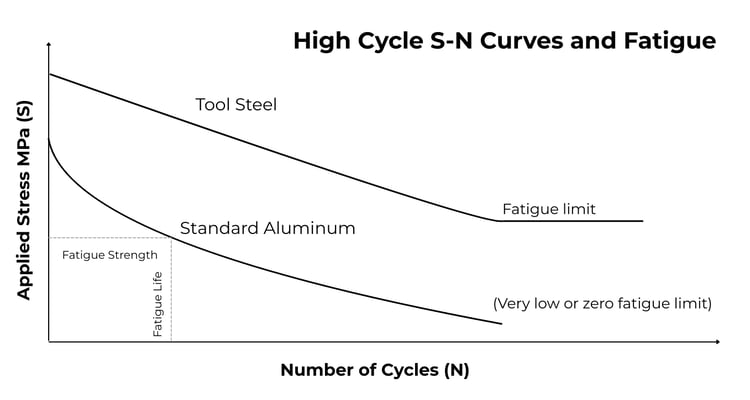
The number of cycles a material can withstand before failure is known as its fatigue life, and the maximum stress it can endure indefinitely without failure is called the fatigue limit.
In metals, fatigue resistance is vital for ensuring long-term reliability in dynamic environments. For example, in aerospace applications, components like wing spars and landing gear experience thousands of load cycles during their service life. A metal with high fatigue resistance will maintain its integrity under these conditions, reducing the risk of unexpected failure and extending the lifespan of the part.
What factors affect fatigue resistance?
Several factors affect a metal’s fatigue resistance, including composition, heat treatment, grain size, and more.
Composition
Metal composition influences fatigue resistance. Alloying elements such as chromium, nickel, and molybdenum can improve strength and slow crack growth. Chromium also improves corrosion resistance, helping prevent surface damage that can start cracks.
Heat Treatment
Heat treatment, especially quenching and tempering, can improve fatigue resistance by refining the microstructure and reducing residual stress. Improper treatment can create stress concentrations or reduce ductility, shortening fatigue life.
Grain Size
Fine-grained metals generally resist fatigue better because their grain boundaries slow crack growth and distribute stress more evenly.
Work Hardening
Work hardening increases strength but can reduce ductility and fatigue resistance. Stress-relief treatments may help restore the material’s ability to absorb repeated loads.
Residual Stress
Residual stress from machining or forming can either improve or reduce fatigue resistance. Compressive stress can delay crack initiation, while tensile stress can accelerate it.
How is fatigue resistance measured?
Measuring fatigue resistance helps engineers predict how reliably a component will perform under repeated loading.
Accurate fatigue testing is essential for predicting a part’s service life, especially in safety-critical aerospace, automotive, and medical applications.
Rotating Bending Fatigue Test
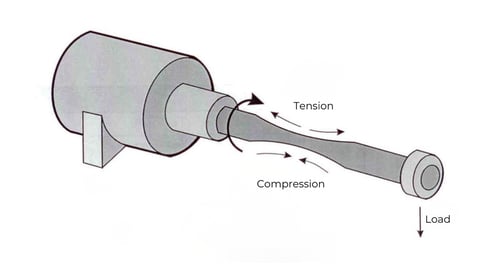
The rotating bending fatigue test applies repeated bending to a rotating specimen to measure fatigue life, or the number of cycles before failure.
The results are plotted on an S-N curve (stress vs. number of cycles), which provides insight into the endurance limit—the stress level below which the material can theoretically withstand infinite cycles without failing.
Fracture Toughness Testing
A fracture toughness test measures how well a material resists crack growth under repeated loading. It is especially useful for parts exposed to surface defects or stress concentrations.
Without accurate testing, engineers cannot reliably predict a part’s service life, especially in critical aerospace, automotive, or medical applications.
Tolerance Analysis Methods
Tolerance analysis uses simulations such as Monte Carlo and RSS to model fatigue in complex assemblies. These methods account for variation in material properties, geometry, and loading conditions.
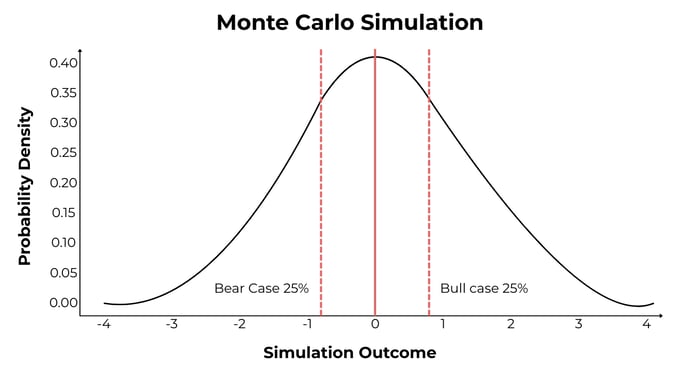
Simulations account for variation in materials, geometry, and loads, improving early fatigue risk assessment. They support design decisions but do not replace physical testing.
Standardized fatigue tests measure fatigue life and endurance limits, helping engineers select materials, refine part geometry, and plan machining strategies.
Fatigue testing supports stronger designs, early identification of failure points, and compliance with performance and regulatory requirements throughout a component’s service life.
What failure modes are associated with fatigue resistance?
Residual stress from machining or forming can either improve or reduce fatigue resistance. Compressive stress can delay crack initiation, while tensile stress can accelerate it.
Fatigue failure can develop without warning over many load cycles. It starts with a crack at a surface defect or stress concentrator, then grows until the part fractures.
Fatigue failure can develop without visible warning, even within design limits. Fatigue analysis and testing are therefore essential for critical components.
Material imperfections and poor design features, such as inclusions, uneven grain structure, or notches, can concentrate stress and increase the risk of fatigue failure.
What is the fatigue resistance of metals?
Simulations account for variation in material properties, geometry, and loading conditions, helping engineers assess fatigue risk in complex assemblies. They support early design decisions but do not replace physical testing.
Commonly machined metals vary widely in their fatigue resistance due to differences in composition, microstructure, and mechanical properties.
- Aluminum alloys are lightweight and easy to machine but have lower fatigue resistance than steels
- Stainless steels offer better fatigue performance, especially with proper heat treatment, though they are more difficult to machine
- Titanium alloys combine a high strength-to-weight ratio with excellent corrosion and fatigue resistance
Below is a table ranking commonly used machined metals from least to most fatigue resistant, along with key machining considerations for each.
|
Metal |
Fatigue Resistance |
Machining Considerations |
|
Low to moderate |
Excellent machinability; prone to chatter; requires attention to surface finish and stress relief. |
|
| Moderate |
Good machinability; ductile; thermal conductivity can affect tool life; surface finish is critical. |
|
|
Moderate to high |
Very machinable; low density; requires careful handling due to flammability and corrosion sensitivity. |
|
|
High |
Work hardening common; use sharp tools and proper cooling; surface finish impacts fatigue life. |
|
|
High |
Good fatigue resistance; relatively easy to machine; benefits from heat treatment and surface finishing. |
Several surface treatments can significantly improve fatigue resistance in machined metals by enhancing surface integrity, reducing stress concentrations, and introducing beneficial compressive stresses.
- Shot Peening - adds compressive surface stress that helps delay crack initiation and slow crack growth, improving fatigue life
- Anodizing - adds a hard, protective oxide layer that improves corrosion resistance and can reduce surface damage that leads to fatigue cracks
- Media Blasting - smooths machining marks and burrs that can concentrate stress. By improving surface uniformity, it helps distribute stress and reduce localized fatigue failure
Selecting the right surface treatment depends on the material type, application requirements, and desired balance between fatigue resistance, corrosion protection, and aesthetics.
How does fatigue resistance affect CNC machining?
High fatigue resistance is valuable for parts under repeated loads, but the material’s strength and toughness can make it harder to machine.
Tool Wear
Fatigue-resistant metals can wear cutting tools quickly because they are hard and abrasive. Use carbide or ceramic tooling and optimized cutting parameters to control heat, reduce stress, and maintain tool life.
Surface Finish
Smooth, uniform surfaces help reduce fatigue cracks. Finishing passes and treatments such as shot peening can lower surface roughness and add compressive stress, improving fatigue life.
Machinability
Fatigue-resistant metals can be difficult to machine because they generate heat, harden during cutting, and require greater cutting forces. Slower feeds, lighter cuts, and high-pressure coolant help maintain process stability.
Tolerances
High fatigue resistance often requires harder, tougher materials that are difficult to machine. Heat buildup, work hardening, and high cutting forces may require slower feeds, lighter cuts, and high-pressure coolant.
Understanding how fatigue resistance interacts with tooling, surface finish, tolerances, and overall machinability is essential for engineers and machinists aiming to produce reliable, high-performance parts.
How to choose the right material for fatigue resistant applications?
The material you select for your component should strike a balance between fatigue performance, manufacturability, cost, and long-term reliability in its intended application.
Use this simple framework to guide your decision-making process.
1. Establish functional criteria
Residual stress can either improve or reduce fatigue resistance. Compressive surface stress delays crack initiation, while tensile stress increases crack risk.
2. Evaluate relevant materials
Start by defining the component’s cyclic loads and service environment. These factors establish the required fatigue life and endurance limit.
3. Consider machinability and surface finish requirements
Fatigue-resistant metals are often harder to machine because of heat buildup, work hardening, and high cutting forces. Use slower feeds, lighter cuts, and high-pressure coolant to maintain process stability.