
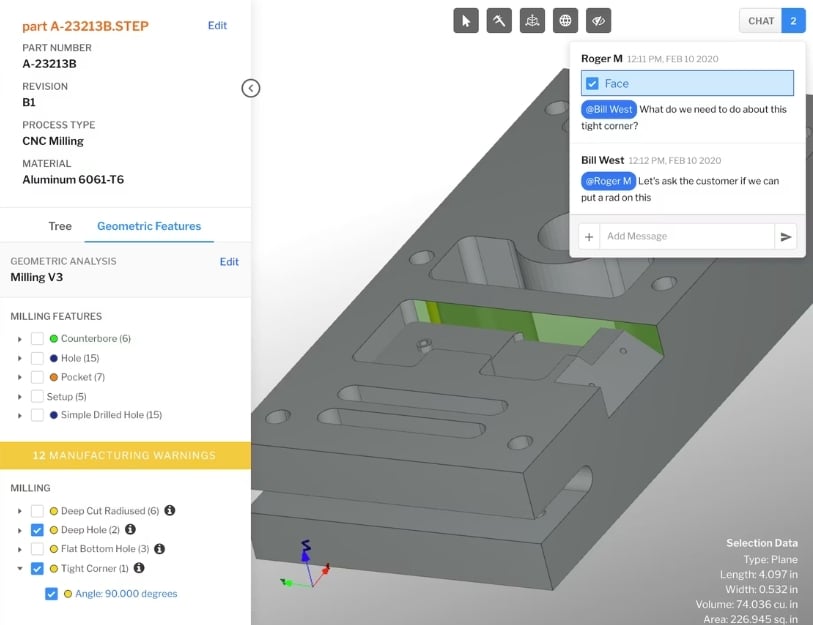
What is DFM?
Design for manufacturability (DFM) is an engineering approach that focuses on design first, making the final product more efficient and cost-effective to produce.
Updated: 8/18/26
Why is DFM important?
Focusing on DFM during the prototype stage helps engineers design, refine, and perfect a part before it enters production. This approach cuts costs, shortens lead times, and enhances the quality of custom parts. It involves reducing the number of parts in the final product, standardizing parts for uniformity, creating modular designs for future use, and streamlining the manufacturing process.
A successful DFM analysis ensures your design is ready for production, leading to lower costs and higher efficiency while maintaining the quality of your parts and products.
For optimal results, involve key stakeholders early in the project. This includes manufacturers, who will transform the engineer's design from a CAD file or prototype into a consistent, compliant, and cost-effective product.
How does DFM work?
The DFM process works by examining five key principles: manufacturing process, design, material, environment and compliance, and testing.
Manufacturing Process
Selecting the right manufacturing process is key to effective DFM. The process you choose impacts cost, lead time, and part quality. Aligning your design with process capabilities avoids extra steps and unnecessary costs—ensuring efficient, consistent manufacturing.
Design
After selecting a manufacturing process, start designing the part. Pay attention to key factors like wall thickness, surface details, texture, and transitions specific to your chosen process. DFM follows the principle of "the simpler, the better." While not every design can be simple, more complex designs are riskier to produce. They might fail during manufacturing or lead to significantly higher costs.
Material
When choosing the right material for your project, consider the specific properties your part needs, such as heat resistance, water resistance, strength, and flexibility. These properties will depend on how the final part will be used.
Related Read: Material Selection Strategy for Machined Components
Environment
Environmental factors significantly influence your part's design. Will it face high stress or force in an industrial setting, or will it be used in an office? Consider where and how the part will be used. This DFM principle ensures your part performs well in its intended environment throughout its lifespan.
Compliance and Testing
In many cases, your part must meet specific industry, internal, or third-party standards. For instance, if your components are used around food, they must comply with all food safety regulations. Consider all relevant standards and plan for testing to ensure compliance during the DFM process.
A successful DFM analysis reduces costs while maintaining or even enhancing the performance of a part or product. Besides the five main principles, other factors also influence the DFM process:
- Volume – p>roducing fewer parts can lead to higher start-up costs, resulting in increased unit prices. However, as you produce more units, the unit price decreases
- Product Complexity – DFM focuses on simplifying designs. Complex designs increase the risk of expensive or inefficient production
- Material Availability – lead time, cost, and other procurement factors impact the whole DFM process
- Appearance – incorporating surface finishes, colors, custom markings, and other aesthetic features increases production costs and time. It's advisable to consider these cosmetic aspects during the design phase, well before production begins
What are DFM best practices for common machined features?
Each use case is unique, making it challenging to list best practices for every situation. However, here are some dependable guidelines for designing common CNC machined features.
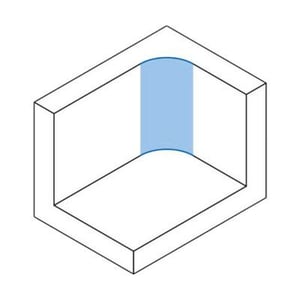
Profiles
Avoid designing profiles with sharp internal corners. CNC tools like end mills are cylindrical and can't create sharp corners. Instead, use fillets or radii to match the tool's shape. This reduces stress and makes the part easier to machine.
Also, keep wall thickness consistent to prevent warping and ensure accurate material removal for better precision.
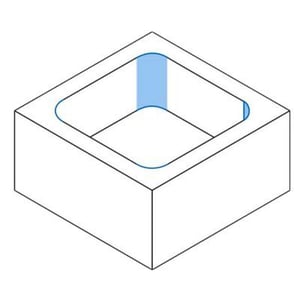
Pockets
To ensure optimal performance, keep pocket depth no more than four times its width. This prevents tool deflection and improves surface finish. Avoiding deep cavities reduces tool breakage risk and enhances machining stability.
Maintain consistent wall thickness to prevent warping and ensure even material removal.
Use rounded internal corners instead of sharp ones to fit tool shapes and minimize stress.
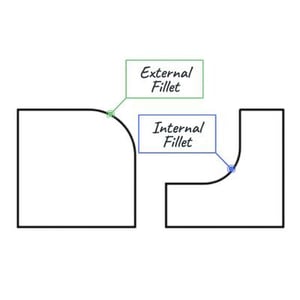
Fillets
Most CNC tools are cylindrical, so internal corners will naturally have a radius. Choose fillets that fit the tool's radius to prevent sharp corners, which can cause stress and potential failure.
Keep fillet sizes consistent throughout the part to ensure even material removal and better dimensional accuracy.
Designing fillets for easy tool access is crucial. Hard-to-reach features can increase machining time and require special tools, raising costs.
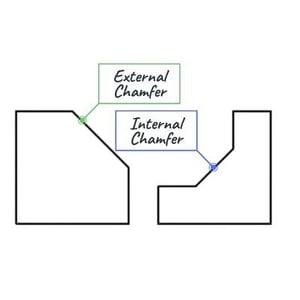
Chamfers
Design chamfers for easy tool access to reduce machining time and avoid costly specialized tools.
Align chamfers with the CNC machine's main axes to streamline the process and boost efficiency.
Keep chamfer sizes consistent across the part ensures even material removal and better accuracy.
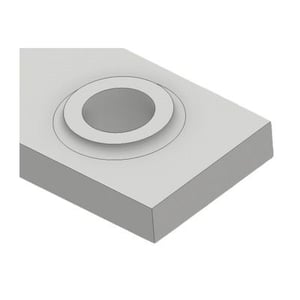
Bosses
A key guideline is to design bosses with the right size and tolerances. They should be wide enough to provide the needed strength and support.
Keep boss heights consistent to help with even material removal and better accuracy.
Avoid sharp edges, as they can cause stress and failure. Instead, use fillets or chamfers at the base to spread stress evenly.
Design bosses for easy tool access to reduce machining time and avoid costly specialized tools.
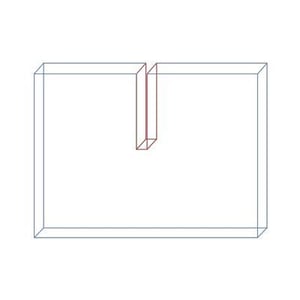
Slots
Keep the slot's depth no more than four times its width. This prevents tool deflection and enhances surface finish. Shallow slots also lower the risk of tool breakage and stabilize the machining process.
Maintain consistent wall thickness to avoid warping and ensure even material removal.
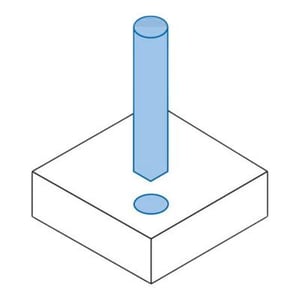
Holes
Keep the hole depth no more than four times its diameter. This prevents tool deflection and improves surface finish.
Avoid deep holes to reduce tool breakage risk and improve machining stability.
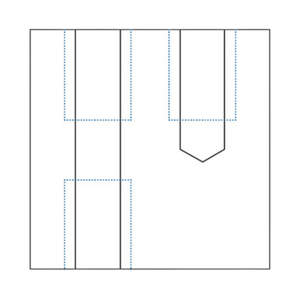
Threads
Ensure threads are designed with the right dimensions and tolerances. They should match the tool geometry used in CNC machining, like thread mills or taps, to prevent mismatches or poor fits that can cause assembly issues or failures.
Avoid sharp edges in thread design to prevent stress concentrations and potential failures.
Consistent thread sizes throughout the part help with uniform material removal and improve accuracy.
Frequently asked questions about DFM
What are the key principles of DFM for CNC machining?
Key principles of DFM for CNC machining are to simplify part shapes, reduce machining steps, choose the right materials, and design for easy fixturing and tooling.
How does simplifying part geometry improve manufacturability?
Streamlining part design makes machining easier, resulting in faster production times and reduced costs. It also lowers the chance of mistakes and ensures a more consistent final product.
How does material selection impact DFM?
Selecting the right materials in DFM is essential because they differ in how easy they are to machine, their cost, and availability. Opting for materials that are easier to machine and more affordable can greatly enhance manufacturability.
Can DFM lower production costs?
Absolutely! DFM can lower production costs by streamlining designs for efficient machining and inspection, reducing material waste and even eliminating the need for rework. This results in cost savings and much higher profitability.
Can DFM improve part quality?
Yes! DFM enhances CNC machined parts by optimizing designs for manufacturing, reducing defects, improving consistency, and boosting the product's reliability and performance.